

MENTAL HEALTH FACTS
The Mental Health Facts are the foundation of The Push-Up Challenge. Your target number of push-ups varies from day to day to reflect a different Mental Health Fact.
They're sourced from peer-reviewed studies by qualified researchers, and undergo a stringent fact-checking process.
Read and share them to start important conversations, boost mental health awareness and help smash the stigma.
DAY 1 : KINDNESS
Today’s push-up goal is 63, representing the 63% of adults who say being kind boosts their mental health.
Kindness is a simple act with a profound impact - not only does it brighten someone’s day, but it can also ease stress and lift your own mood.
Acts of kindness are linked to greater self-esteem, optimism, and a stronger sense of belonging - all key ingredients for good mental health.
Ways to practice kindness
- Send a thoughtful message to a friend or colleague.
- Offer to help someone with a small task.
- Do something kind for yourself today.
Source: Kindness and mental health | Mental Health Foundation (2020)
DAY 2 : YOUTH MENTAL HEALTH
Today’s push-up target is 75, because over 75% of life-long mental health conditions develop before the age of 25.
Most mental health challenges begin early in life. Recognising them early can prevent challenges from deepening, while building lifelong skills that support a healthier, more resilient future.
Support, awareness, and healthy habits early on make a lasting difference. Adopting mentally healthy behaviours early helps young people manage stress, strengthen relationships, and build the resilience they need to thrive.
Ways to support youth mental health
- Foster strong connections by being present, supportive and reliable.
- Encourage healthy coping skills like mindfulness, problem-solving and stress management.
- Promote active lifestyles through sport, play and movement.
- Create safe spaces for open conversations and check in regularly.
If you or someone you know needs support, please reach out to crisis support services. Help is available.
Need support?
If you’re a young person or worried about one, contact Youthline:
- Free call: 0800 376 633
- Text: 234
Support for young people, their whānau, and friends.
For a full list of helplines, visit: https://mentalhealth.org.nz/help
It’s Waitangi Day!
To young people and their whānau across Aotearoa, we hope you take a moment to reflect today. Together, we celebrate the signing of Te Tiriti o Waitangi and celebrate culture, community, and connection – all key to our mental wellbeing.
Source: Kessler et al 2005 ‘Lifelong prevalence and age-of-onset distributions of DSM-IV disorders in the National Comorbidity Survey Replication Link: https://pubmed.ncbi.nlm.nih.gov/15939837/
DAY 3 : MINDFULNESS
Today’s push-up target is 100, to represent the 10 minutes a day it takes for mindfulness to have a positive impact on mental wellbeing.
Just like push-ups strengthen muscles, mindfulness strengthens mental resilience. Even brief daily practice can improve focus, reduce stress, and create space to respond to challenges with greater calm and clarity.
Research shows you don’t need hours of meditation to feel the benefits. Just 10 minutes a day can help to improve focus, reduce stress and build long-term habits that improve mental wellbeing.
Tips to practice mindfulness
- Start small – try a short, guided meditation or breathing exercise.
- Pair mindfulness with a walk – notice sights, sounds, and sensations.
- Turn daily routines (like making tea) into mindful moments.
Source: *R. Hooper, E. Guest, C. Ramsey-Wade, A. Slater,. A brief mindfulness meditation can ameliorate the effects of exposure to idealised social media images on self-esteem, mood, and body appreciation in young women: An online randomised controlled experiment, Body Image, Volume 49, 2024.
https://www.sciencedirect.com/science/article/pii/S174014452400024X
https://www.health.harvard.edu/mind-and-mood/10-minutes-of-daily-mindfulness-may-help-change-your-outlook-about-health-improvements
https://bpspsychub.onlinelibrary.wiley.com/doi/10.1111/bjhp.12745
DAY 4: REST DAY
Time to give yourself a rest from push-ups. Today is one of three rest days during the Challenge. Use it wisely, because we're back at it tomorrow.
DAY 5 : PETS
Today’s goal is 87 push-ups, for the 87% of pet owners who reported mental health improvements as a result of pet ownership.
Pets bring more than joy - they offer unconditional love, companionship, and a sense of purpose, all of which can boost mental wellbeing.
Caring for a pet can reduce stress, ease feelings of loneliness, and provide routine and connection, supporting overall emotional health.
Ways to connect with animals
- Take your dog for a walk or play with your cat.
- Watch fish swim - it’s calming and soothing.
- Notice birdsong or wildlife in your area.
Source: Human Animal Bond Research Institute 2021 https://habri.org/pet-owners-survey/#2021-survey
DAY 6 : MENTAL ILLNESS
Today’s push-up target is 50, for the 50% of the world’s population that will experience a mental illness in their lifetime.
Mental illness is common, and anyone can experience it. Awareness and open conversations help reduce stigma, making it easier for people to seek support when they need it.
With understanding and timely support, individuals can access treatment and resources that improve recovery and wellbeing. Encouraging open dialogue creates a culture where help is accepted and accessible.
Ways to support mental health
- Talk openly about mental health to reduce the stigma.
- Support friends or family to access professional help if needed.
- Encourage activities that promote overall mental wellbeing.
If you or someone you know needs support, please reach out. Help is available. You can find a list of helplines available at https://mentalhealth.org.nz/help
Sources: McGrath et al. 2023 ‘Age of onset and cumulative risk of mental disorders: a cross-national analysis of population surveys from 29 countries’ The Lancet Psychiatry, vol 10, issue 9, p668-681. Link: Age of onset and cumulative risk of mental disorders: a cross-national analysis of population surveys from 29 countries - ScienceDirect
Harvard Medical School, ‘Half or World’s Population will experience a mental health disorder’ News & Research Article 2023. Link: https://hms.harvard.edu/news/half-worlds-population-will-experience-mental-health-disorder
DAY 7 : MENTAL HEALTH MATTERS
Today’s push-up goal is 46, representing the 46% of people worldwide who believe mental health matters more than physical health for overall wellbeing.
For a long time, physical health was seen as the foundation of wellbeing. Now, more and more people see mental health as just as important - and often the key to thriving.
Looking after our mental health helps us live fuller lives. It strengthens relationships, learning, productivity, and resilience - showing that caring for our minds is essential to overall wellbeing.
- Get enough sleep - aim for 7–9 hours to recharge your body and mind.
- Move your body - even short walks or stretches boost mood and focus.
- Connect with others - a quick chat with a friend or family member can lift your spirits.
Source: Wellcome report: global monitor mental health 2020 Link: Wellcome Global Monitor: Mental Health. Chapter 1 | Wellcome
DAY 8 : PHYSICAL ACTIVITY
Today's push-up target is 140, because moving your body can increase your wellbeing by 14%.
Being active isn’t only about fitness – it’s one of the most natural ways to boost mental wellbeing. A global study found people who move more report higher happiness, greater life satisfaction, and significantly lower psychological distress.
Physical activity sparks changes in the brain that reduce stress and improve mood. Even light movement can release endorphins, sharpen focus, and increase resilience – giving both the body and mind a boost.
- Find movement you enjoy – dance, walk, cycle, stretch.
- Break it up – short bursts of activity add up.
- Make it social – invite a friend for a walk or game.
Source: Active Citizens Worldwide 2019 Link: https://www.smartcitiesandsport.org/empowering-policy-makers-through-data-analysis/
DAY 9 : GIRLS & YOUNG WOMEN
Today’s push-up goal is 89, representing the 89% of girls and young women who report feeling worried or anxious.
Many girls and young women report feeling pressures around school, work, finances, or body image. These worries can take a toll. Listening with compassion is important.
Creating safe spaces, offering encouragement, and ensuring access to resources can help young women feel heard, valued, and supported in their mental wellbeing.
- Encourage open, non-judgmental conversations.
- Build supportive networks through friends, mentors, or community groups.
- Promote positive body image and self-worth.
- Remind them it’s okay to reach out and ask for help.
If you’re a young person who needs to talk, or you’re worried about someone who is, contact Youthline:
Free call 0800 376 633 or text 234 for support for young people, their whānau, and friends.
For a full list of helplines, visit: https://mentalhealth.org.nz/helpSource: Girlguiding ’Girls’ Attitudes Survey 2023’
DAY 10 : NATURE
Today’s push-up target is 120, because spending at least 120 minutes in nature every week is linked to better health and wellbeing.
Science confirms what many people feel instinctively – time outdoors is good for us. Just two hours a week in natural settings has been shown to improve overall health and wellbeing.
Being surrounded by greenery can calm the nervous system, lower stress, and lift mood. From parks to woods and forests, time in nature fosters relaxation, connection, and positive mental wellbeing.
Tips to enjoy more nature:
- Take breaks outdoors – sip your coffee or lunch outside.
- Add a walk in the park or local trail to your weekly routine.
- Plan small adventures – explore a beach, trail, or lookout nearby.
Source: White, M. P., Alcock, I., Grellier, J., et al. (2019). Spending at least 120 minutes a week in nature is associated with good health and wellbeing. Scientific Reports, 9(1), 7730. Link: https://www.nature.com/articles/s41598-019-44097-3
DAY 11: REST DAY
Great work so far everyone. We certainly do love our push-ups here at Push-Up HQ, but it's true, you can get too much of a good thing. So take time to chill, chat with friends and family, or do something a bit awesome today. Push-ups are back tomorrow.
DAY 12 : GRATITUDE
Today's push-up target is 75, according to a study, just 75 minutes of gratitude practice each week can boost mental wellbeing.
Gratitude shifts focus from what may be lacking to what’s present and good. This simple habit strengthens resilience, improves mood, and deepens connections with others.
Studies show practising gratitude can reduce stress, improve sleep, and even enhance overall life satisfaction. It’s a small daily habit with lasting impact.
Easy ways to practise gratitude:
- Pause and notice - reflect on small daily moments like a sunrise or a smile.
- Share appreciation - tell someone why you value them.
- End the day with gratitude - think of one good thing before bed.
Supporting info: https://www.health.harvard.edu/blog/gratitude-enhances-health-brings-happiness-and-may-even-lengthen-lives-202409113071
DAY 13 : DIGITAL HEALTH
Today’s push-up goal is 64, representing the 64% of people worldwide who use social media.
Social media can be a powerful tool for connection, creativity, and support. It allows people to share experiences, express themselves, and access valuable resources across the globe.
While social media can have benefits, too much screen time or negative online experiences can increase stress and contribute to mental health challenges. Striking a healthy balance helps protect your mental health.
Tips for digital wellbeing:
- Set limits - take regular breaks from your screen.
- Switch off - avoid scrolling before bedtime for better sleep.
- Curate your feed - follow accounts that uplift and inspire you.
Sources: Statista 2025 ‘Number of internet and social media users worldwide as of February 2025’ Link: https://www.statista.com/statistics/617136/digital-population-worldwide/#:~:text=As%20of%20February%202025%2C%205.56,population%2C%20were%20social%20media%20users
DAY 14 : SLEEP
Today’s push-up target is 143, highlighting that people who get 7 to 9 hours of sleep each night are 1.43 times less likely to experience poor mental health.
Sleep is essential for both our physical and mental wellbeing. Quality rest helps regulate emotions, sharpen focus, and support resilience. When sleep is cut short, these processes are disrupted, leaving us more vulnerable to stress, low mood, and mental health challenges.
Getting 7–9 hours of sleep is a simple yet powerful way to protect mental health. Regular, restorative sleep supports memory, concentration, and emotional balance, while also giving the brain time to repair and reset for the day ahead.
Tips for better sleep:
- Stick to a regular bedtime and wake-up time, (yes, even on weekends).
- Create a calming bedtime routine – think reading, stretching, or journaling.
- Limit caffeine and screen time in the hours before bed.
Source: Zhang et al. 2024 ‘Association of sleep duration and risk of mental disorder: a systematic review and meta-analysis’, Sleep and Breathing. Link: (PDF) Association of sleep duration and risk of mental disorder: a systematic review and meta-analysis
DAY 15 : MEDIA & STIGMA
Today’s push-up goal is 70, representing the 70% of people with mental health conditions who believe the media contributes to stigma and discrimination.
The media holds real power in shaping public perceptions of mental health. Positive stories of hope can build understanding and reduce stigma, helping people feel seen and supported.
Harmful stereotypes, like linking mental illness with violence or using negative labels, can deepen stigma and discourage people from seeking support. Words matter, and respectful coverage can make a real difference.
How we can shift the story:
- Share and support accurate, respectful reporting.
- Call out stigmatising language when you see it.
- Highlight hopeful recovery stories.
Source: United for Global Mental Health ‘Stigma and Discrimination’ [in 2022 Lancet Commission report].
DAY 16 : VOLUNTEERING
Today’s push-up goal is 85, as volunteering to help others has been linked to an 8.5% boost in mental health.
Helping others by volunteering doesn’t just benefit those on the receiving end - it also strengthens your own wellbeing by building connection, meaning, and joy.
Volunteering has been shown to increase social connection, create a sense of purpose, and boost happiness, all of which support better mental health.
Ways to give back:
- Offer your time to a local charity or cause you care about.
- Volunteer at community events or clean-up projects.
- Check in on neighbours or friends who might need support.
Source: Yeung, J. W., Zhang, Z., & Kim, T. Y. (2018). Volunteering and health benefits in general adults: cumulative effects and forms. BMC public health, 18, 1-8. Link: https://doi.org/10.1186/s12889-017-4561-8
DAY 17 : FRIENDSHIP
Today’s push-up goal is 170, reflecting the 17% boost in wellbeing that each new friendship can bring.
Friendships can be powerful for our mental health. Research with young adults found each new friendship was linked to a 17% lift in wellbeing - a reminder of how connection helps us thrive.
While this study focused on young adults, friendships matter at every age. Supportive relationships bring joy, reduce stress, and strengthen resilience.
Tips to nurture friendships:
- Be open to new connections through hobbies, clubs, or volunteering.
- Celebrate your friends’ milestones and achievements.
- Be present - listen, share, and show you care.
Source: World Happiness Report 2025: Connecting with others: How social connections improve the happiness of young adults | The World Happiness Report
DAY 18: REST DAY
It’s Rest Day - your final one of the Challenge. Take today to recharge, stretch it out, catch up on some pushies or enjoy a well-earned slow Sunday. We’re back at it tomorrow for the final push.
DAY 19 : SOCIAL MEDIA
Today’s push-up goal is 53, representing the 53% of young adults who say they feel better emotionally and mentally when they spend less time on social media.
Social media can help us connect, share, and express ourselves, however, how we use it can affect our mental health.
Social media can build connection and community, but it can also influence sleep, body image, self-esteem, and stress levels. Finding balance is key to protecting wellbeing.
Healthy digital habits:
- Take regular breaks from scrolling.
- Swap some screen time for time in nature or movement.
- Stay grounded by prioritising real-world connections.
Source: The Cybersmile Foundation (2025). Digital Wellbeing Report (2025): A national UK study examining the impact of social media use on Gen Z wellbeing. Link: https://www.cybersmile.org/resource/digital-wellbeing-report-2025/
DAY 20 : SOCIAL CONNECTEDNESS
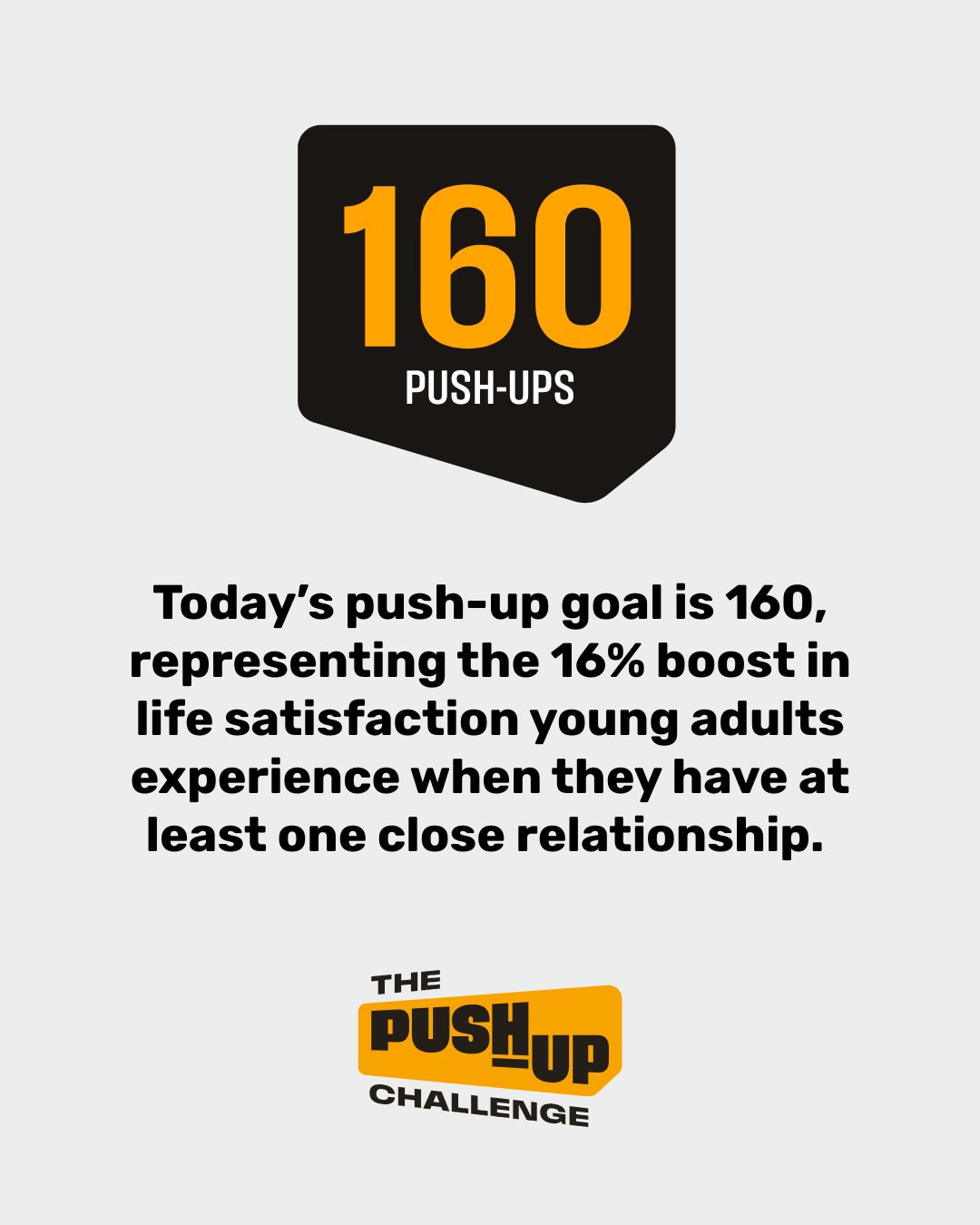
Today’s push-up goal is 160, representing the 16% boost in life satisfaction young adults experience when they have at least one close relationship.
Research shows that for young adults (aged 18–29), the more socially connected they are, the more satisfied they are with their lives. However, strong connections matter at every stage of life.
Strong connections provide emotional support, reduce stress, and foster resilience. Close relationships help people feel valued, understood, and better equipped to navigate life’s ups and downs.
Tips to build connection
- Invest time in relationships that matter most.
- Join groups, clubs, or activities that align with your interests.
- Be open - share honestly and listen deeply to strengthen bonds.
Source: World Happiness Report 2025 ‘Connecting with others: How social connections improve the happiness of young adults’: https://www.worldhappiness.report/ed/2025/connecting-with-others-how-social-connections-improve-the-happiness-of-young-adults
DAY 21 : CHILDREN'S PHYSICAL ACTIVITY
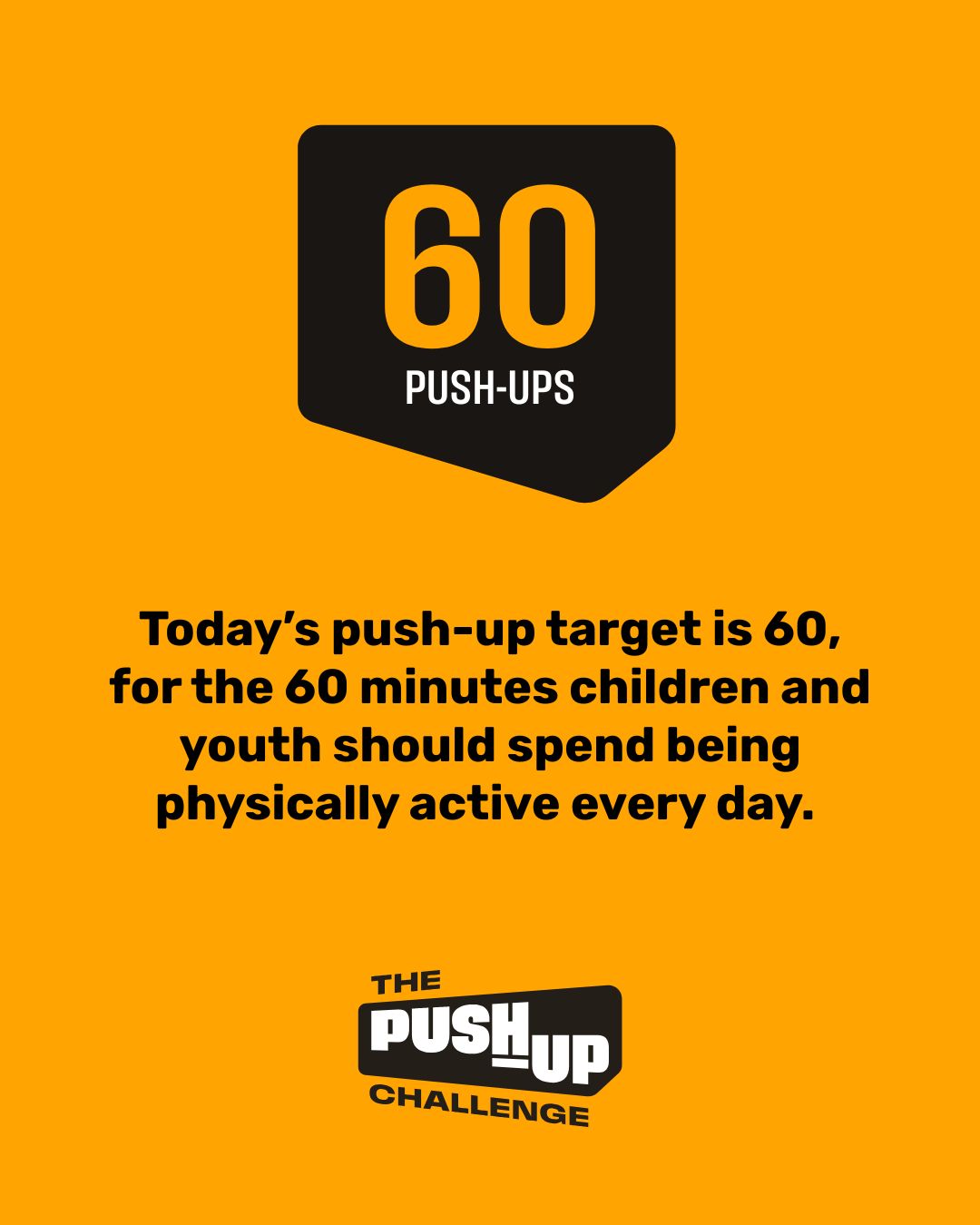
Today’s push-up target is 60, for the 60 minutes children and youth should spend being physically active every day.
Daily activity helps children and youth grow strong, develop coordination, and build confidence. It also supports emotional wellbeing, giving them tools to manage stress and express themselves.
Research shows that active children and youth tend to have better focus, memory, and problem-solving skills. Physical activity also fosters resilience and positive mood, laying a foundation for lifelong health and wellbeing.
Tips for encouraging active kids:
- Make activity fun - play games, sports, or go on outdoor adventures.
- Get moving as a family to build healthy habits together.
- Encourage time outdoors in parks, backyards, or local trails.
Source: World Health Organization 2021 WHO Guidelines on Physical Activity and Sedentary Behaviour
DAY 22 : MEN'S SUICIDE
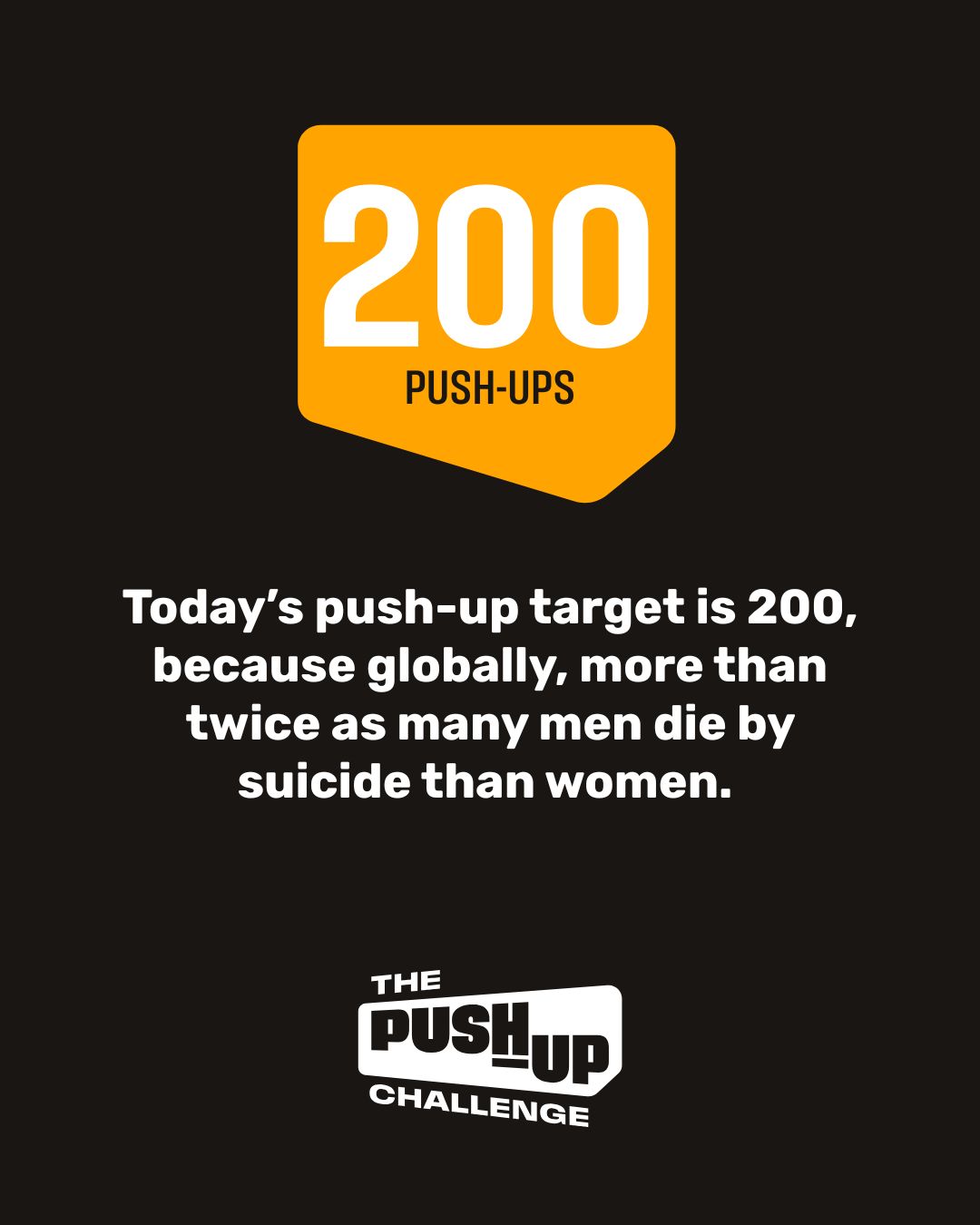
Today’s push-up target is 200, because globally, more than twice as many men die by suicide than women.
Suicide is complex and influenced by many factors. For men, risks can be shaped by social expectations, isolation, or difficulty finding services that meet their needs. Recognising these pressures and tailoring support can help men feel understood and reduce barriers to help-seeking.
Everyone faces challenges, but no one should face them alone. Reaching out can ease the load, strengthen connection, and open the door to support - whether that means talking with a friend, a family member, or a trained professional.
Ways to support men’s mental health:
- Check in with the men in your life - small chats can make a big difference.
- Encourage connection - hobbies, sport, or community groups can build belonging.
- Listen without judgment and encourage professional help when needed.
If you or someone else is in immediate danger, please call 111. If you need to talk to someone, you can free call 1737 or text 1737 to reach a trained counsellor anytime, 24/7.
If you or someone you know needs support, please reach out. Help is available. Find a list of helplines at https://mentalhealth.org.nz/help.
Source: World Health Organisation 2021 Link https://www.who.int/news/item/17-06-2021-one-in-100-deaths-is-by-suicide
DAY 23 : PHYSICAL ACTIVITY
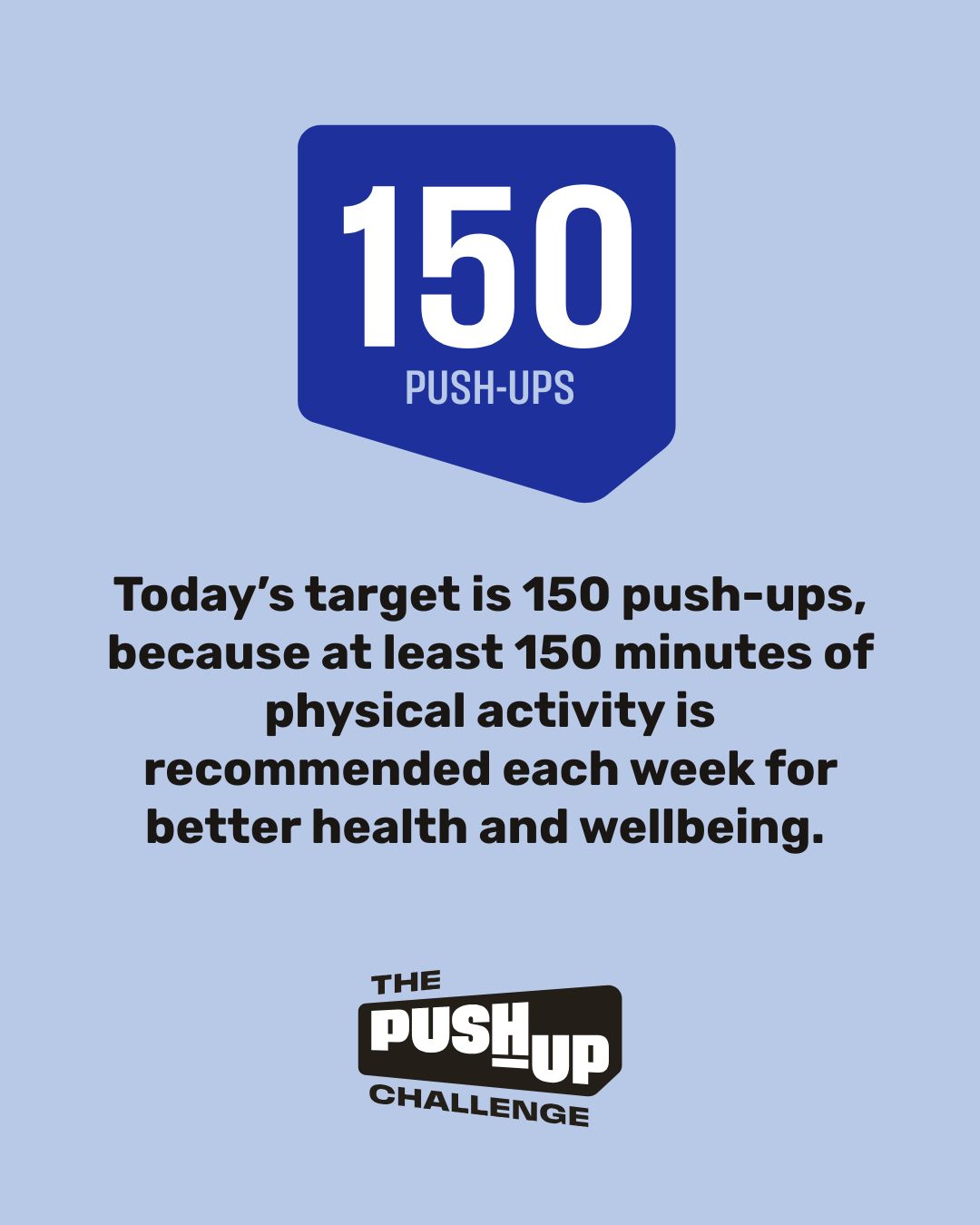
Today’s target is 150 push-ups, because at least 150 minutes of physical activity is recommended each week for better health and wellbeing.
Regular activity isn’t just good for your body - it’s one of the most effective ways to support your mind. Exercise can ease stress, lift mood, and reduce symptoms of anxiety and depression.
When you move, your body releases endorphins and other “feel good” chemicals that boost energy and focus. Just 150 minutes a week - about 20 minutes a day - can help build resilience and improve overall wellbeing.
Tips to move more:
- Break it up - every step counts, even short walks add up!
- Make movement fun- dance, ride, or play your favourite sport.
- Exercise with a friend for extra motivation and connection.
Source: World Health Organization 2025 Factsheets: ‘Physical Activity’.